
Which machine and which diamond blade should I use on each surface?
A very common question from our customers is which machine or diamond segment to use depending on the work surface. First of all, it’s important to understand that surface polishing is a gradual process. We cannot use a fine-grit diamond segment on a rough surface or a coarse-grit segment on a previously polished surface because we would completely ruin it. We must use the diamond segments progressively, starting with the coarsest-grit segments and continuing with medium- and fine-grit segments until a mirror finish is achieved, if that is the goal.
Let’s go!
To remove old layers up to 7 mm thick
For these types of surfaces, we recommend a machine with substantial weight, such as the Scan Combiflex 650, Scan Combiflex 700RC, Scan Combiflex 800, or Scan Combiflex 1000RC models from the Swedish company Scanmaskin
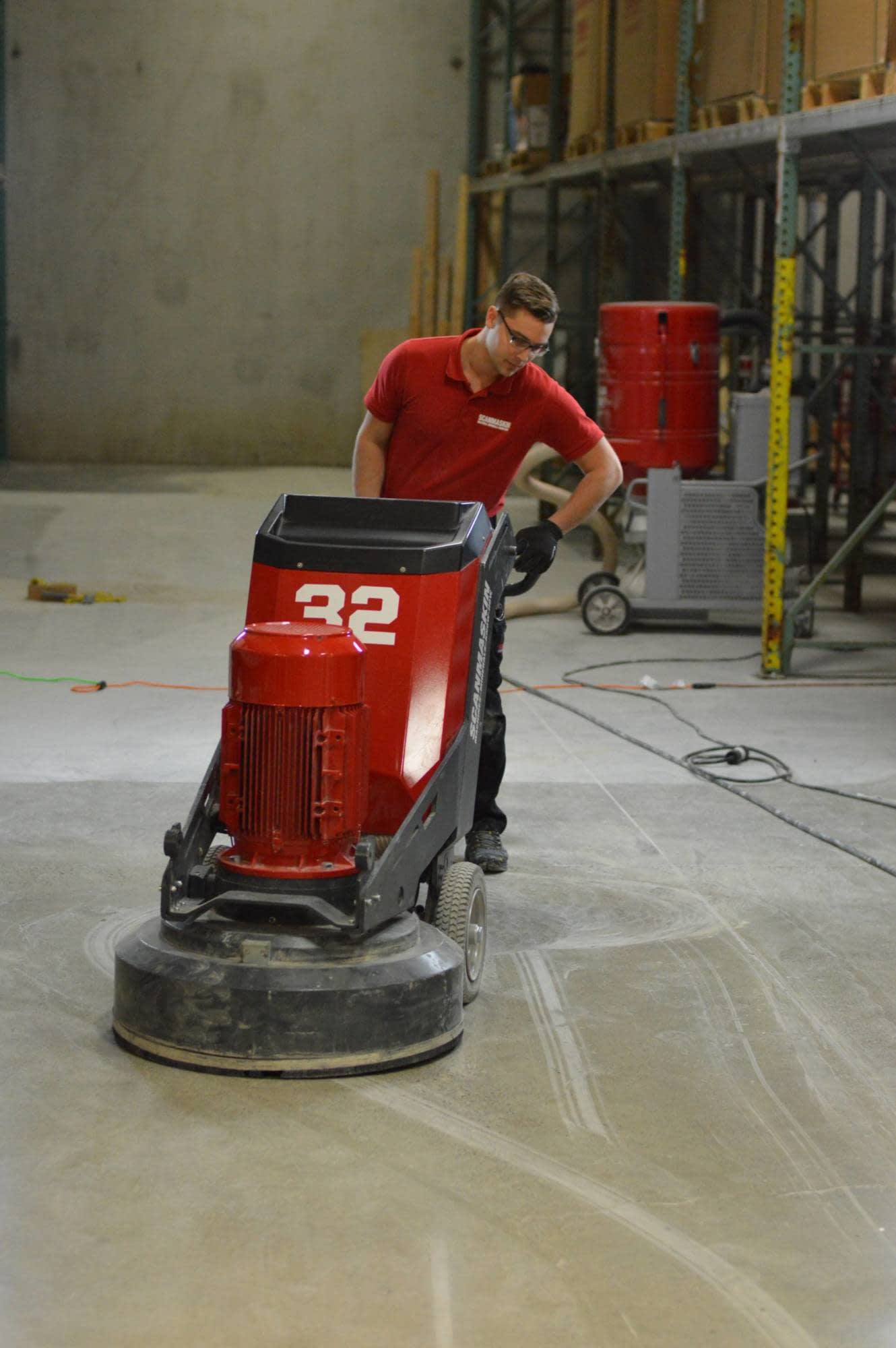
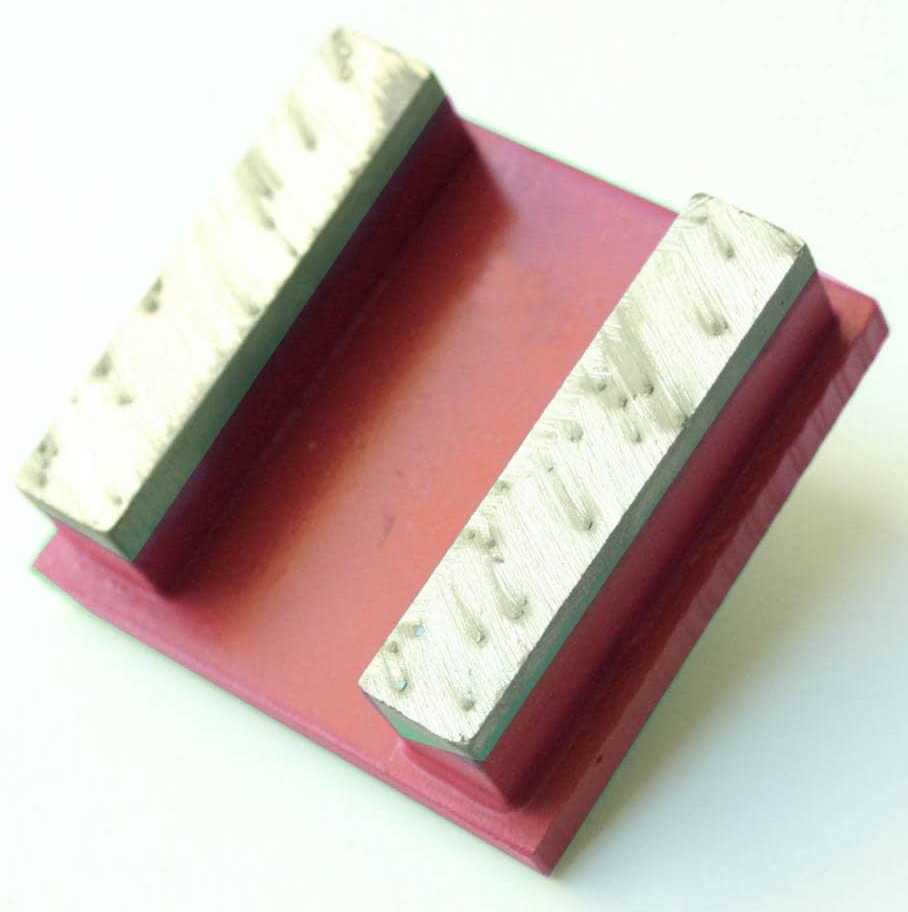
The next step is to choose the right abrasive to start polishing, but in this case, we’ll need a very abrasive segment that can easily remove the old layer—at least 7 mm thick. To do this, we recommend starting with an initial pass using Piraña polycrystalline diamond (PCD) plates, which will do the heavy lifting, and then using a coarse-grit diamond to remove the scratches. Depending on the type of material, we’ll use the following:
B1 25/40, black, for standard concrete
Red B1D 25/40 for abrasive concrete
Blue SBB 25/30 for hardened concrete
To remove old layers up to 4 mm thick
For this type of surface, such a heavy machine is not necessary. We recommend any of the following models: Scan Combiflex 450, Scan Combiflex 450NS, Scan Combiflex 500i, or Scan Combiflex 500PD.
Next, we will select the appropriate cutting tool. In this case, we recommend plates with polycrystalline carbide (PCD) segments, since we do not need as deep a cut as before. After running this type of segment once, we again recommend using a coarse-grit segment to even out the surface. As before, we can use any of the following plates depending on the surface:
B1 25/40, black, for standard concrete
Red B1D 25/40 for abrasive concrete
Blue SBB 25/30 for hard concrete
B1 25/40, black, for standard concrete
Red B1D 25/40 for abrasive concrete
Blue SBB 25/30 for hard concrete
Prepare the floor before laying a new floor covering
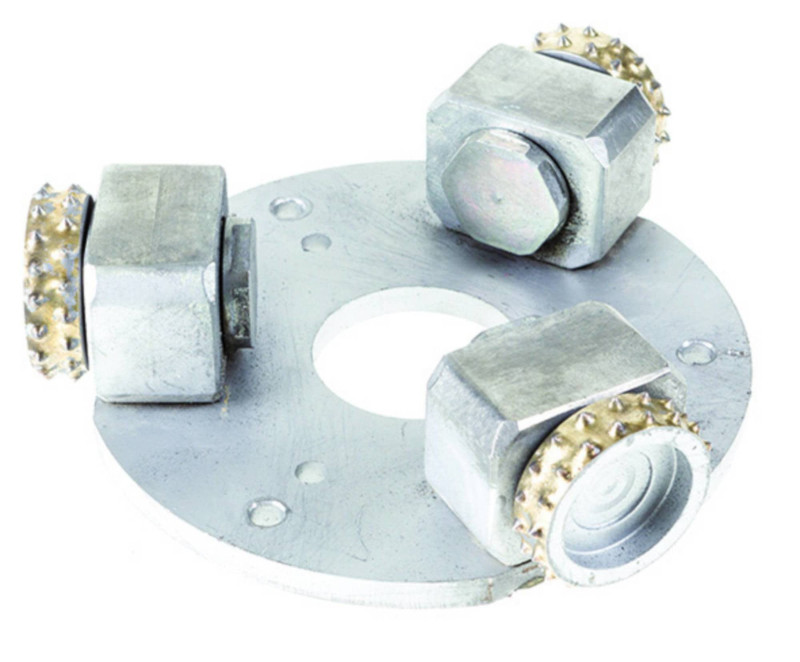
Once we have removed the old layers, we have two options: polish the surface as is or apply a new coating. In this case, to ensure good adhesion, it is recommended to roughen the surface slightly. Scanmaskin’s Scan Combiflex 650 and Scan Combiflex 800 polishers feature the “Bush Hammer,” an accessory that allows you to achieve a result comparable to that of a scarifier or a shot blaster. Another option for achieving this roughness would be to use an extra-coarse diamond, such as the dark green EXB 16/18.
To prepare the floor before painting
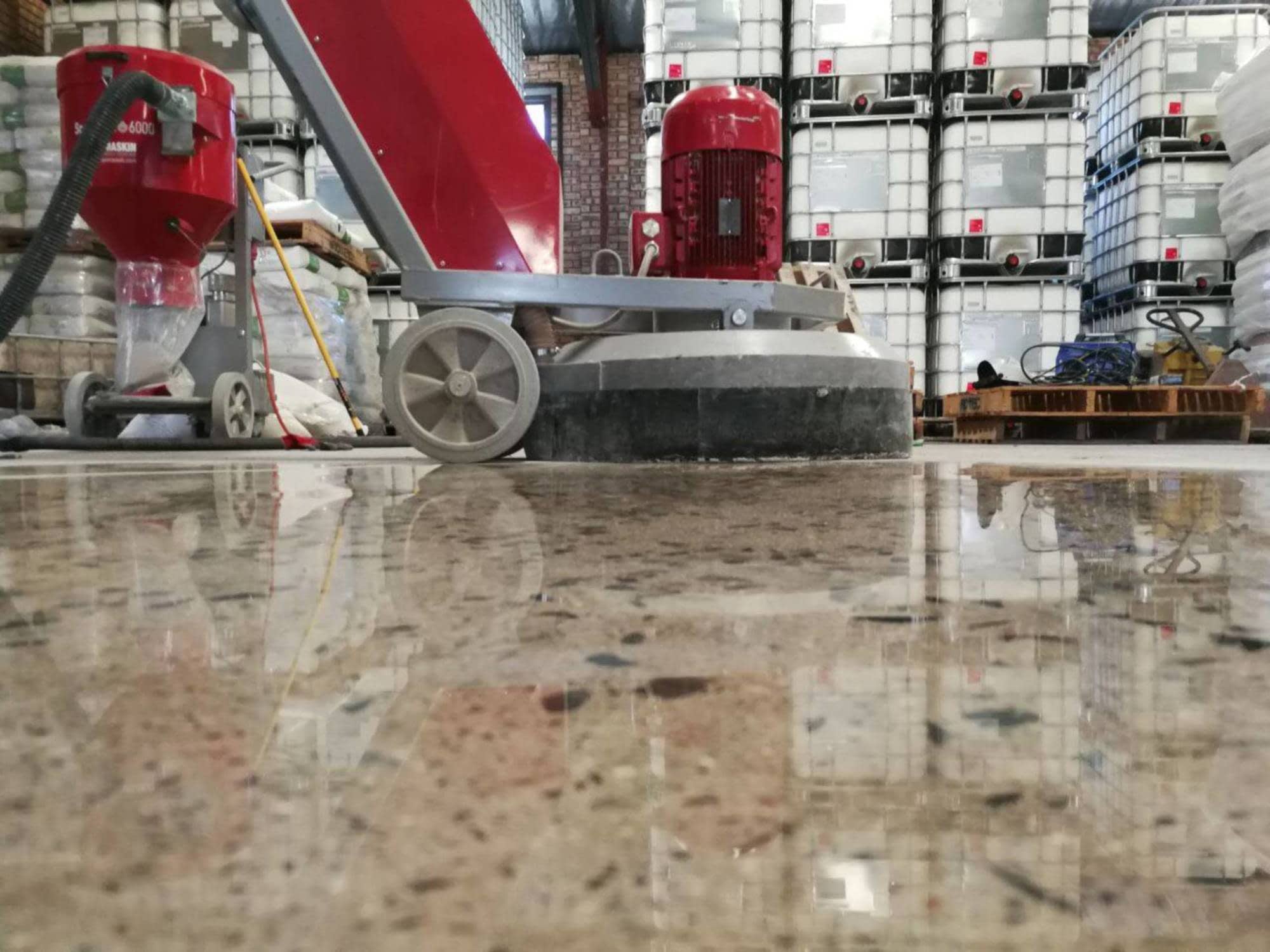
If, instead of repairing a surface, we want to paint it, it’s highly recommended to prepare the floor beforehand so that the finish looks much more professional. We can use a simple machine, such as the SC 450, and give it a quick pass with medium-grit diamond segmented pads—such as the orange ST 40/50 pads—and our floor will be ready to be painted!
If you have any questions about which machine or type of diamond blade to use on a specific surface, feel free to contact us anytime, and we’ll be happy to advise you!